How to use reagent test kits
Prepare a speck, add a drop, watch the color. Here is the full routine, including the two-part reagents.
6 min read · Last updated September 27, 2026
Handle these as corrosive chemicals
Prepare
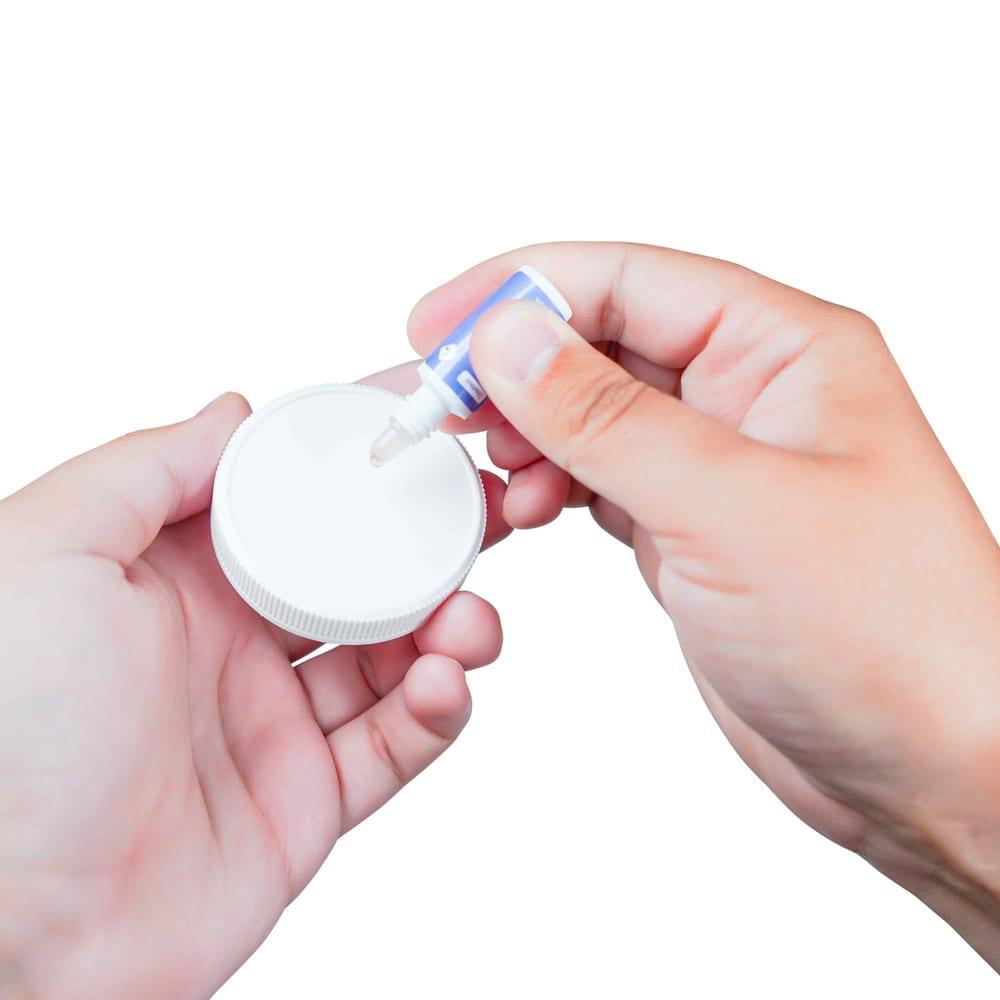
Put a tiny amount of your sample on a white ceramic plate, mug or our testing platform. Use about as much as fits on a matchstick head or a grain of rice. For blotters, use one sixth of a blotter.
Test
Remove the cap and tilt the bottle until one drop falls onto the sample. Do not let the tip touch the sample. Watch closely for 30 to 60 seconds. Many samples change color once and then again, so keep watching.
Two-part kits
Simons (Sa + Sb), Robadope (Ra + Rb) and Morris (A + B) are two-part reagents. Add one drop of A to the sample first, then bottle B onto the same spot — follow the drop count printed on the bottles.
Read
Compare the color with a reagent color chart. Below are the reactions we can state with confidence; for anything else, email us with a photo or short video and we'll help you read it.
Reactions we can state
| Reagent | Reaction | Points to |
|---|---|---|
| Simons | Bright cobalt blue | MDMA, MDE, methamphetamine or methylone (secondary amines) |
| Simons | No change | MDA, amphetamine or MDPV |
| Ehrlich | Pink turning purple over 5 to 15 minutes | An indole such as LSD, DMT or psilocybin — also 5-HTP or melatonin |
| Ehrlich | No reaction | NBOMe and DOx compounds do not react |
| Froehde | No reaction | LSD usually does not react |
| Froehde | Vivid yellow or green | DOM and most LSD substitutes |
| Marquis | No reaction | DOM |
| Mandelin | Yellow in the bottle | The liquid is yellow before it reacts — that is the reagent, not a result |
Color alone is never proof. Run a second reagent from the kit.
Afterwards
Neutralize the drop with a little baking soda, rinse the surface with water, and put the bottles back capped and upright — ideally in the fridge.
Tips
- Test more than once if you can — a speck of powder does not represent the whole sample.
- Work in good light.
- Do not swap caps between bottles.
- Let cold bottles warm to room temperature before opening.
- LSD reactions take 5 to 15 minutes, not seconds.
Know the limits
- Reagents react to the whole sample. Mixed samples can look like mixed paint, or one color can hide another.
- Reagents cannot detect fentanyl or benzodiazepines at the amounts that matter. A fentanyl test strip answers the fentanyl question; benzodiazepines are outside what anything we sell can tell you.
- A reagent narrows down what a sample could be. It does not remove risk.
Kits for this test
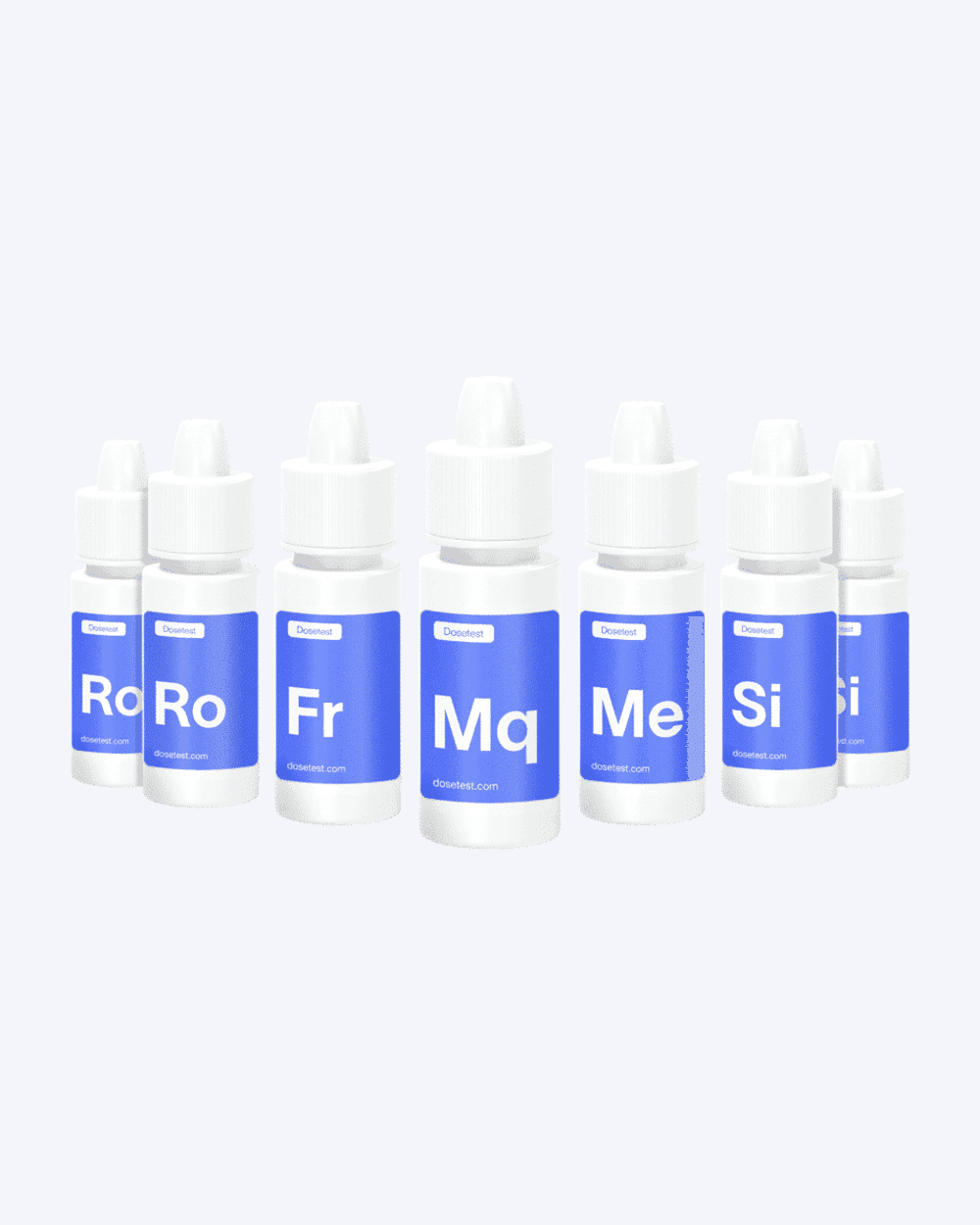 MDMA Kit – StandardFive reagents chosen for MDMA: Marquis, Simons, Mecke, Froehde and Robadope, to confirm the main ingredient and spot the usual substitutes and cuts.
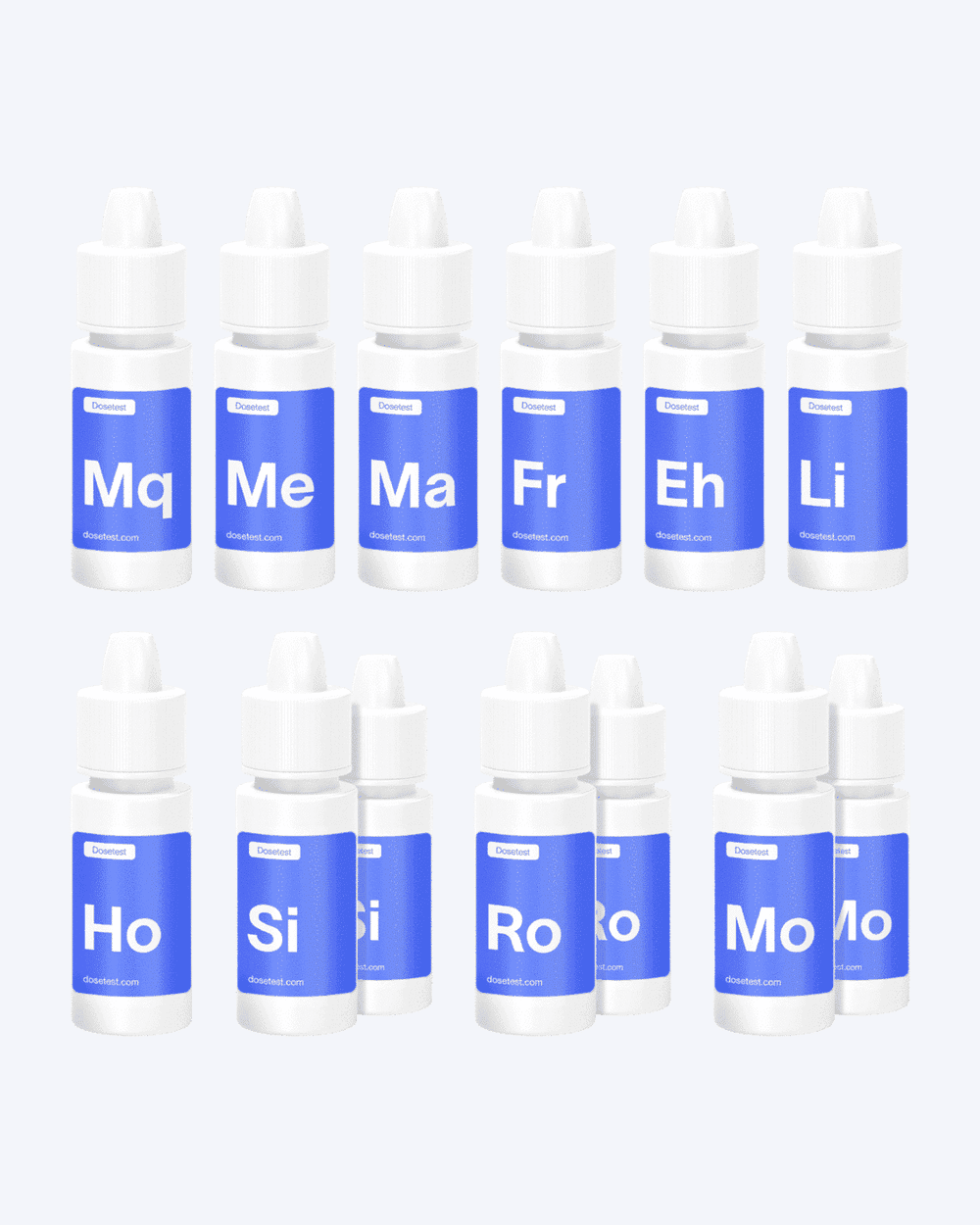 Complete Kit – 10-in-1A lab in a box: all ten Dosetest reagents, about 100 tests each, for people who test for friends or want to check uncommon substances.
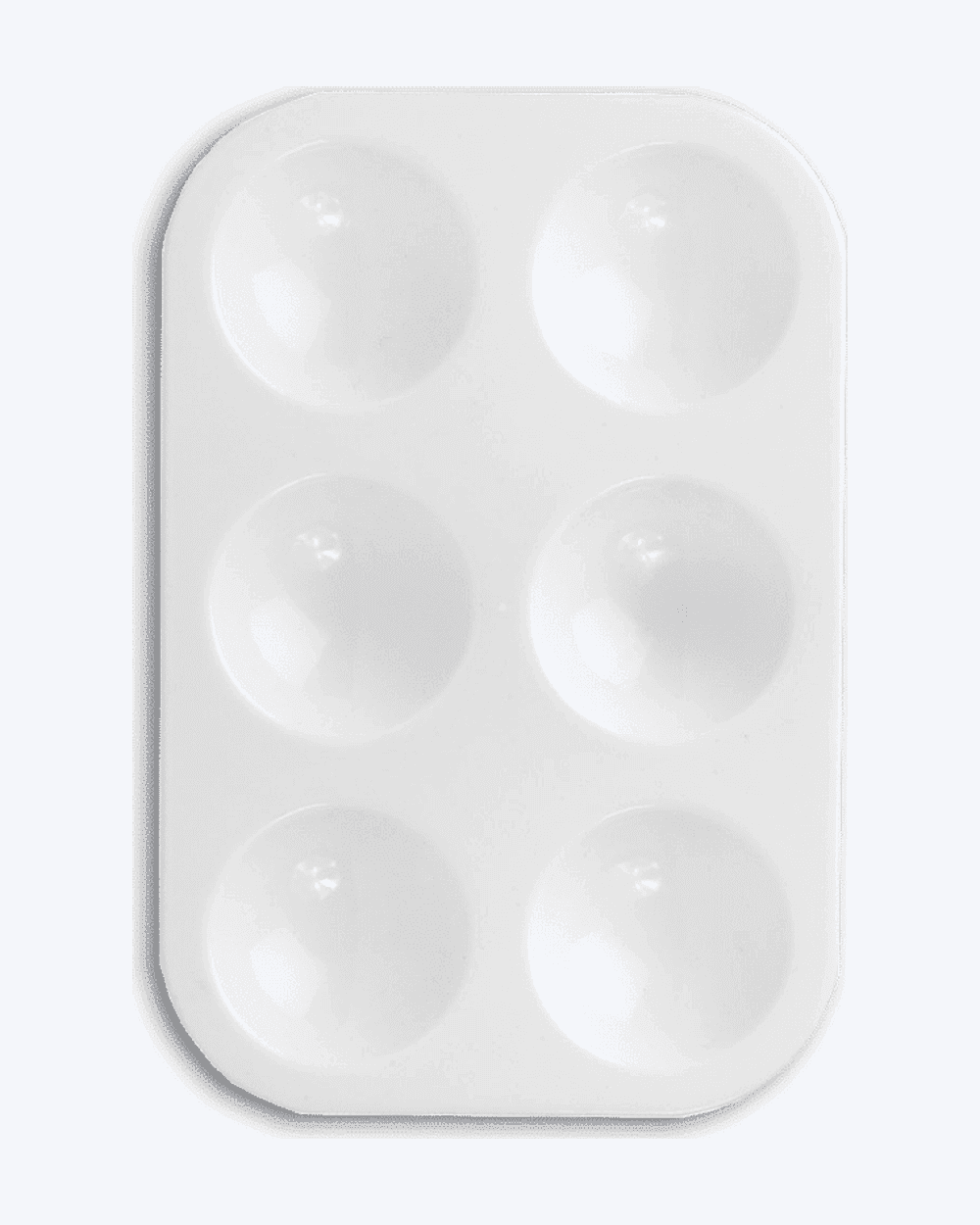 Testing PlatformA small six-well LDPE dimple tray that keeps reagent drops contained, makes colour changes easier to read, and beats a dinner plate for portability.
Common questions
I'm unsure about a result.
Email us a photo or short video of the reaction from the help page. Tell us which reagents you used and the order you used them.
I got several possible results.
With more reagents you narrow the options. MDMA and 6-APDB react the same to Marquis, but Simons and Froehde tell them apart — which is why the kits are sold as sets rather than as one bottle. If every reagent you run points the same way, that is as much certainty as reagent testing gives.