What's in your heroin?
Manufacturing impurities, cutting agents, and the fentanyl analogues that have replaced heroin in much of the supply.
8 min read · Published September 27, 2026 · Last updated September 27, 2026
In much of North America, a bag sold as heroin does not contain heroin. We don't know any more than you do (and neither does your dealer).
The figures below are from the studies cited; drug-checking data changes year to year.
The scale of the substitution is the whole story. Of 1,006 samples checked in Vancouver in 2017, 888 tested positive for fentanyl; of the 822 sold as heroin, 109 actually contained heroin. Get Your Drugs Tested found fentanyl in 102 of 180 samples submitted as heroin. At Insite, Vancouver's supervised consumption site, nearly every sample checked in 2016 contained fentanyl. A Colombo Plan project with NMS Labs analyzed 431 samples collected in Vermont and Kentucky and found the same displacement underway.
Manufacturing impurities
Heroin that is actually heroin carries the marks of how it was made. Acetylation leaves acetylcodeine and 6-monoacetylmorphine behind; incomplete processing leaves morphine, papaverine and noscapine. None of these are added deliberately and none are the main risk, but they are why brown and white heroin behave differently and why a batch from one route can feel unlike a batch from another. A Copenhagen service published results on 30 white and 34 brown samples and the impurity profiles separate cleanly along those lines.
Inert cutting agents
Sugars — lactose, mannitol, glucose — and starch add weight and do nothing else pharmacologically. Quinine has a long history in white powder heroin because it mimics the bitterness. Inert does not mean harmless when it is injected: fillers that do not dissolve damage veins and can lodge in tissue. This is an argument for filters rather than for testing, but it is part of what is in the bag.
Caffeine
Caffeine appears in smoked heroin because it lowers the temperature at which heroin vaporizes, which makes a smaller amount go further. It is the one cut that has a functional reason rather than a purely economic one, and it is common enough in brown powder that its absence is more notable than its presence.
Fentanyl and its analogues
Fentanyl is potent enough that an amount too small to see changes a dose completely, and it does not mix evenly through a powder. Two bags cut from the same batch can differ; two ends of the same bag can differ. Analogues — acetylfentanyl, furanylfentanyl, carfentanil and others — turn up alongside it, and carfentanil in particular has been identified in street samples in North America. Fentanyl-involved deaths in England and Wales rose from 8 in 2008 to 135 in 2017, and Swedish authorities recorded more than 300 fentanyl-analogue deaths in a three-year period.
Why tolerance does not transfer the way you expect
Opioid tolerance is real but it is not complete, and it is not interchangeable between compounds. Someone with a stable heroin habit has tolerance to heroin; a bag that is fentanyl instead of heroin presents a different compound at a different potency, and the tolerance carries over only partly. The same applies between fentanyl and its analogues. This is why people who have used daily for years still overdose on a bag that looked like every other bag, and why a break of even a few days — a hospital stay, a spell inside, a stint of abstinence — makes the next dose far more dangerous than the last one was.
What testing actually gets you
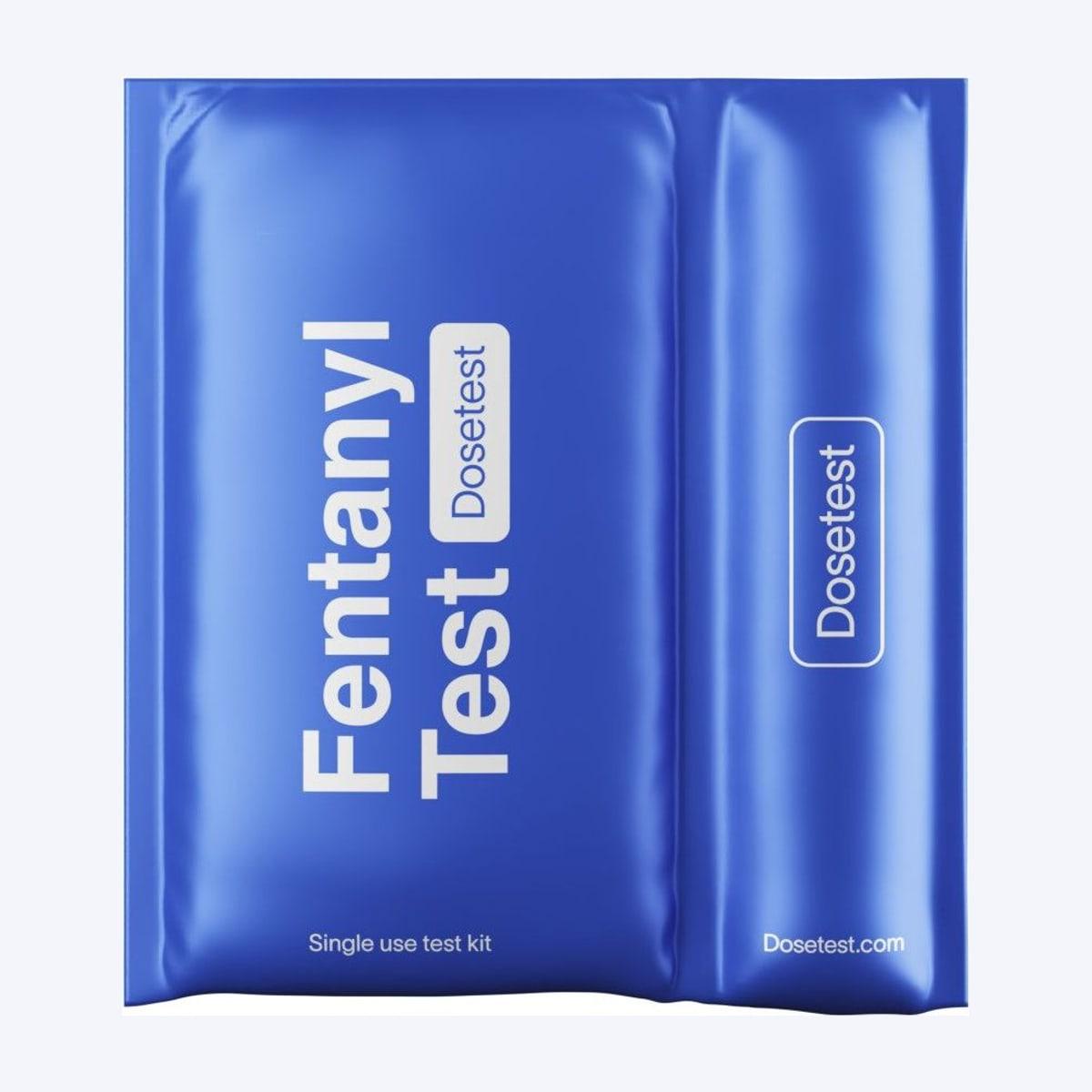
A fentanyl test strip answers one question about the part of the sample you dissolved: was fentanyl detected. It does not tell you how much, and it does not speak for the rest of the bag. It also answers for fentanyl only — a fentanyl strip does not detect xylazine or nitazenes, both of which turn up in the same supply, and we do not sell strips for them. Reagents are not the tool here at all; they cannot detect fentanyl at the amounts that matter.
- A negative result never means a sample is free of fentanyl. Test each batch, and test more than one part of it if you can.
- Keep naloxone within reach, and make sure the person you are with knows where it is.
- Do not use alone. If you are alone, stagger doses and stay in contact with someone who can call for help.
References
- Vancouver drug-checking results, 1,006 samples, 2017.
- Get Your Drugs Tested (Vancouver), samples submitted as heroin.
- Insite supervised consumption site, fentanyl checking, 2016.
- The Colombo Plan with NMS Labs, street-sample analysis, Vermont and Kentucky, 2017.
- Skyen (Copenhagen), white and brown heroin sample results.
- Office for National Statistics, deaths related to drug poisoning, England and Wales, 2008–2017.
- Swedish reporting on deaths involving fentanyl analogues over a three-year period.